David Tamburini at the Mandarin Oriental Tokyo: life of an Italian executive sous chef
di Gaia Soleri
| Storie e Interviste | Del 29/05/2026 |
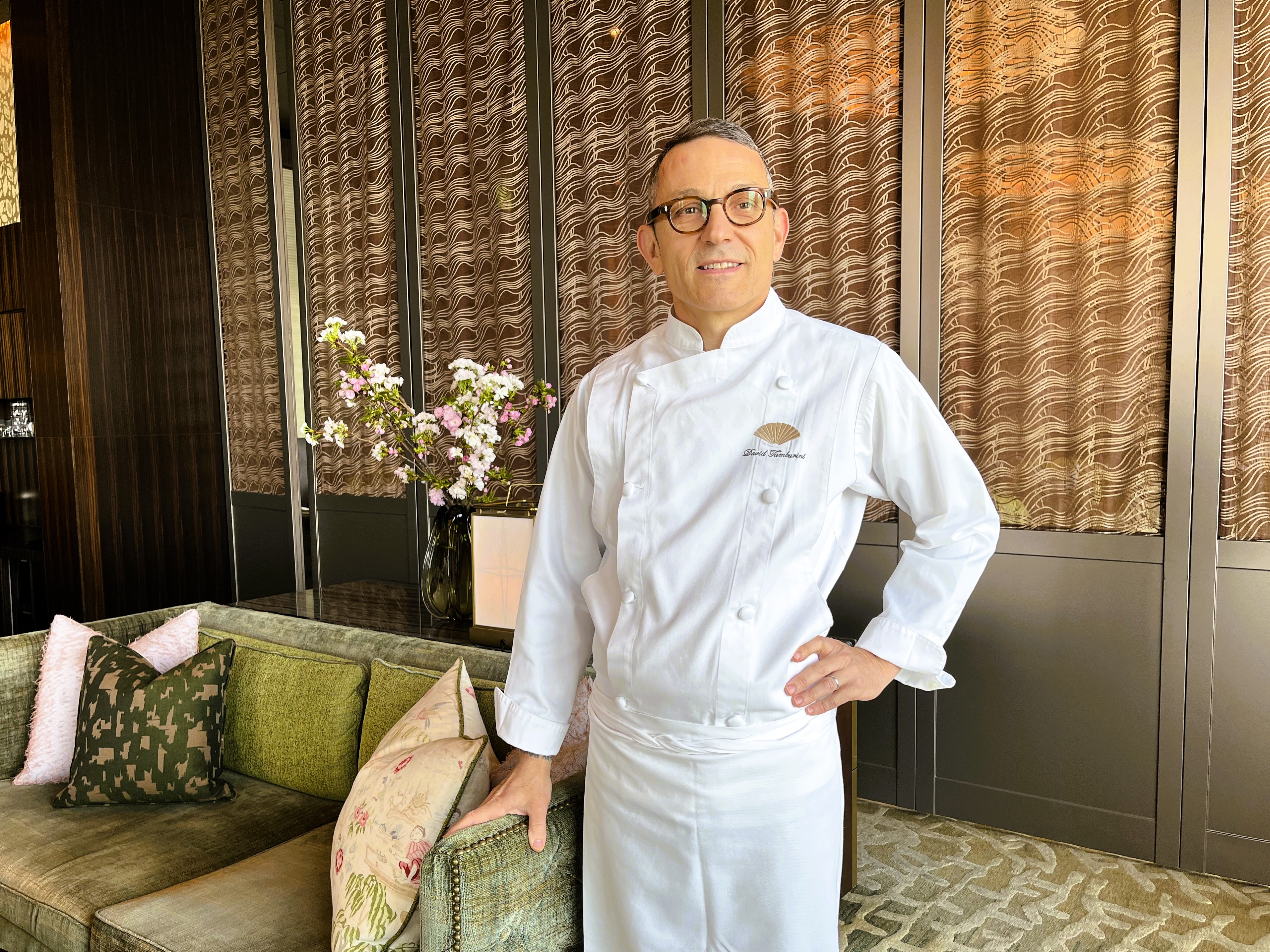
In the heart of Tokyo, where Japanese precision meets an international outlook, David Tamburini oversees one of the most complex kitchen brigades in global luxury hospitality. Executive sous chef at the Mandarin Oriental, Tokyo, Tamburini has built an intense professional journey that led him from Italy to Asia, with formative experiences in Hong Kong, Bangkok, and Kobe. In this interview, he reflects on his love for the East, the philosophy of Japanese hospitality, and the challenges of leading international kitchen teams. A calm, grounded Tuscan chef who approaches his work with honesty, passion, and a constant smile.
Interview with David Tamburini, Executive sous chef at the Mandarin Oriental Tokyo
Could you walk us through your responsibilities in your current role at the Mandarin Oriental?
I am the Executive Sous Chef, second in command and assistant to Daniele Cason, the hotel’s Executive Chef since 2015 and creator of the renowned Pizza Bar on 38th. My role involves overseeing 130 chefs operating across the hotel’s ten restaurants. It is an incredibly stimulating and rewarding position, though naturally one that demands great commitment and attention, given the exceptionally high standards expected here.
Managing meetings and projects, as well as solving operational issues, are all part of the job. The work in the kitchens is intense and far from easy: my responsibility is to keep the entire machine running smoothly, coordinating the various departments. I am very proud to work at the Mandarin Oriental Tokyo because it truly represents a temple of both Japanese and international hospitality.
Is Japanese hospitality unmatched?
Here at the Mandarin Oriental, omotenashi — the traditional Japanese art of hospitality, which goes far beyond simple service — is expressed at the highest level. Our well-trained staff provide exceptional, personalized experiences.
During a recent visit to the hotel, our CEO said something that stayed with me: “When you choose to work in hospitality, there are moments when you realize that the care and love you have for the guest exceed those you have for yourself.” Every day we try to give our best, fully aware that service can determine the success or failure of the entire experience.
What was your experience in Kobe like?
I truly enjoyed it and cooked extensively. I had the opportunity to work closely with producers of exceptional ingredients, from the sweet, juicy onions of Awaji Island to incredibly tender leeks.
The quality of life there is excellent: the ocean is right in front of you, filled with fascinating seafood, while mountains rise behind the city, and Kyoto and Osaka are nearby. Kobe feels deeply Japanese and less international than Tokyo. Despite having one and a half million inhabitants, it still preserves the intimate atmosphere of a smaller city, somewhat like Florence.
How was your transition to the East, from Hong Kong to Tokyo?
Every stage came with its own challenges. Arriving from Italy, Hong Kong was my first real encounter with Asia, and I had to adapt to Chinese culture. Bangkok felt easier, mainly because Thai people are more open, smiling, and empathetic.
When I arrived in Japan, I realized right away that things were going to be fundamentally different. Over time, I learned how to manage relationships with the staff. Japanese people are traditionally more reserved and formal, so as a foreigner it is essential to adapt to and respect their culture.
Work pace is also very different compared to Italy. Here, time is precious, and patience is required to get the desired outcome. Still, I enjoy my job tremendously, despite the occasional stressful moments.
How easy is it to source Italian ingredients in Asia?
In Bangkok and Hong Kong, it is relatively easy because around 80% of ingredients are imported. Japan is a completely different story, as imports from Italy are kept to a minimum. It should be noted that in Japanese culture, domestic products — such as vegetables and meat— are valued more highly than imported ones.
What is your favorite Japanese ingredient?
Yuba — often called “tofu skin” — is my dream ingredient. I love the idea of working with something so delicate and intangible, like the skin that forms on soy milk, and transforming it into dishes with completely different expressions of flavor. Yuba is like a blank canvas for creativity.
How would you describe the flavor of fish in Japan?
It comes from Japanese preparation and handling techniques, which are all aimed at achieving purity and delicacy in raw fish.
I must admit, however, that I sometimes miss the less refined Italian approach to fish preparation, which gives seafood a stronger, more pronounced aroma of the sea. To put it bluntly: for the Japanese, fish in Italy “smells.”
What is your favorite fish?
I would say tachiuo (scabbard fish), a prized Japanese fish with a long, silver body that is fascinating to work with.
When I was in Kobe, I used to prepare it marinated like sardines, in a shime-saba style, using white wine, garlic, and parsley. I served it raw over grilled zucchini with zucchini sauce.
I also love ribbonfish, skewered and grilled over a Japanese charcoal grill, served with a Trapanese-style tomato pesto.
How difficult is it to lead an international brigade in Tokyo? Any “Lost in translation” moments?
The overwhelming majority of restaurant staff here is Japanese, alongside Filipinos, Indonesians, Italians, French, and Spaniards.
I will not hide the fact that managing such a large structure is difficult, but it is also stimulating. You need to understand each person’s personality and cultural background, know when to push, and carefully weigh your words.
Speaking of language, I learned a basic vocabulary — just enough to operate professionally. That is perfectly fine for me.
Did you have to change your leadership style in Japan?
Very little, actually. By nature, I am patient and quite diplomatic. Even in Italy I was always quite calm. At the core of it all, I approach my work with genuine passion, and I believe I am able to motivate the staff consistently.
What was your childhood comfort dish?
Parmigiana di melanzane (eggplant parmigiana). My grandmother was Neapolitan and used to make it for us.
Did you have a gamechanger in your life?
Professionally speaking, one name immediately comes to mind: Italian chef Paolo Lopriore, with whom I worked twenty years ago. Thanks to him, I went through a crucial phase of my career, receiving invaluable training, guidance and inspiration. Lopriore possesses extraordinary charisma and the ability to create magic through the smallest details — ultimately, the hallmark of great chefs.
What is your favorite pasta dish?
Like the Japanese, I love long pasta. I would say spaghetti alle vongole (with clams): a simple dish that tastes of the sea.