Chef Dibenedetto shines in London with his soulful haute cuisine
di Gaia Soleri
| Storie e Interviste | Del 02/07/2026 |
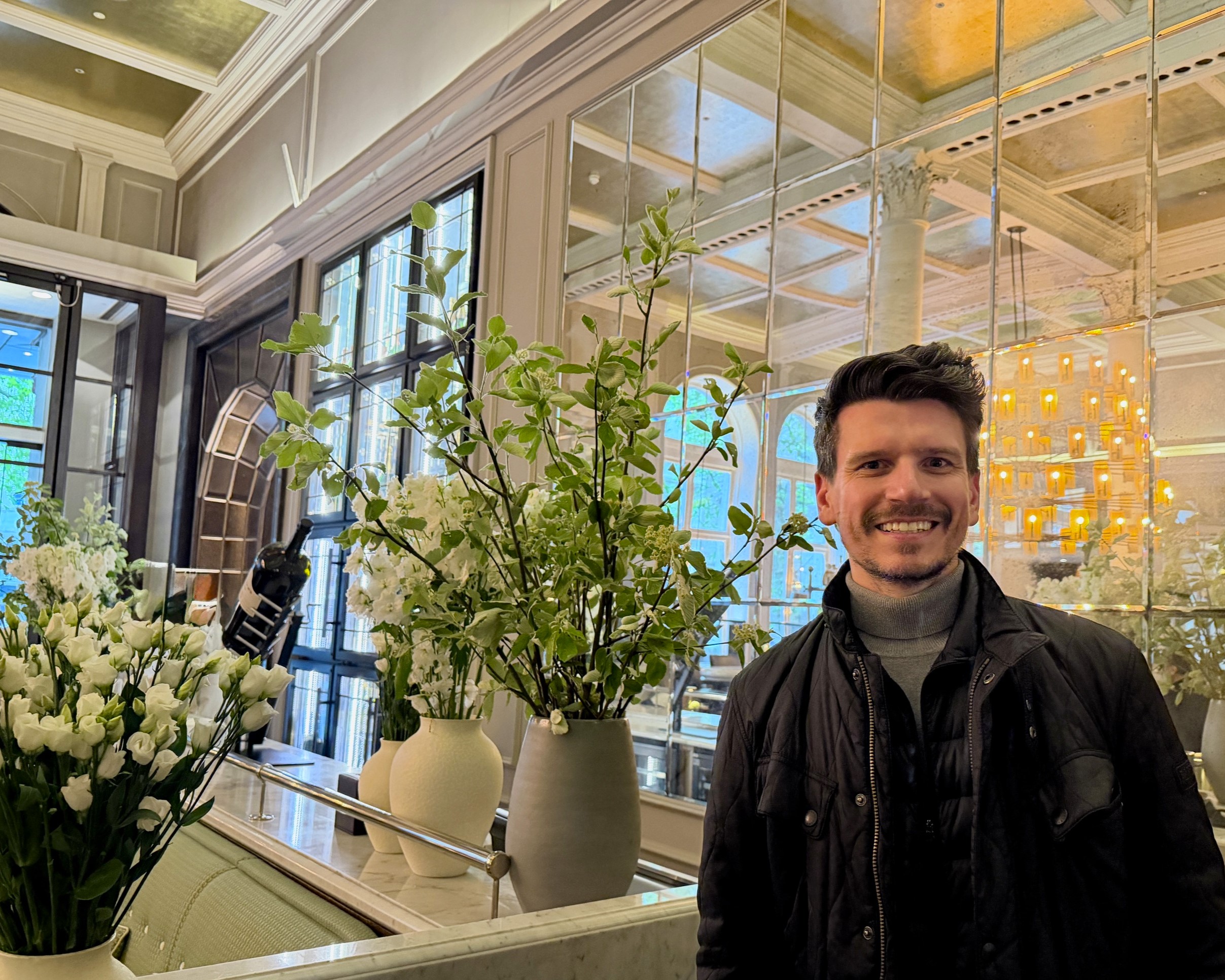
With his Apulian heart and international soul, Francesco Dibenedetto has made his mark on London's fine dining scene. Challenging the conventions of luxury gastronomy with rigour and passion, he places seasonality at the heart of every dish. His Michelin-starred cuisine combines precision, sensitivity and bold creativity. A generous and inspiring mentor, Dibenedetto believes young chefs need not only technical skills, but also a passion that must be nurtured every single day. From Barletta to London, via the great tradition of French sauces, he shares the story behind his deeply personal cuisine at Claude Bosi's Brooklands.
Interview with Francesco Dibenedetto, Michelin-starred Executive Chef in London
What is the Italian essence behind your cooking?
My culinary identity truly emerged once I reached my thirties and reconnected with my childhood memories. I left Puglia when I was fourteen and Italy when I was eighteen. After living in major cities and absorbing countless influences, my Italian roots had gradually faded.
My cuisine had become the sum of all the experiences I had gathered in different kitchens: multicultural and rich yet lacking a clear identity. About seven years ago, during a trip back to Puglia, I experienced something of an epiphany. I reconnected with my homeland and with the memories of my youth. My Apulian roots became the cornerstone of my cooking, and I had the opportunity to showcase them at Brooklands in London.
It was a profound turning point for me. Today, I try to return to Puglia at least three times a year, and as soon as I land, the first thing I do is head to the countryside with my father.
How important are French sauces to you?
They are part of my DNA as a saucier. To me, the sauce is the star of a dish; it is what elevates a protein or a vegetable. I am extremely rigorous when it comes to preparation, paying close attention to temperatures and textures. And no whisk allowed.
If you ask me which sauce I love most, I cannot answer. It would be like asking me which child I prefer.
For young chefs today, learning certain preparations has become increasingly difficult. Here in London, many restaurants, including Michelin-starred establishments, no longer make stocks in-house and instead buy ready-made bases and broths. How do we explain the difference between a bouillon, a consommé and a jus gras? These are essential skills that risk disappearing.
How do you showcase Italian and British ingredients?
I approach them in the same way. I have an almost visceral relationship with every ingredient. Whether it is fish, meat, vegetables, vinegar or spices, I want to understand every nuance in order to bring out its full potential.
For me, the key is to respect the ingredient and achieve the right balance of flavours. Personally, I love acidity and bitterness. Here in Britain, turnips have become incredibly fashionable.
As I do not particularly enjoy sweetness, when I create desserts I seek combinations that never feel overly sugary. One creation I am especially fond of is a dessert made with cooked pink grapefruit, passion fruit, turmeric and an oil extracted from plum kernels, which naturally develops almond notes.
Speaking of poultry: for Paul Bocuse it was chicken, for Joël Robuchon quail. What about you?
For me, it’s pigeon. I absolutely love it.
I prepare it with juniper, tamarind and summer savoury, garnished with chanterelle mushrooms and served with a Morteau sausage stuffing tucked beneath the breast. It is one of my favourite dishes.
What is life like in “Bosi-land”, the kingdom of Claude Bosi?
I worked alongside Claude Bosi for fourteen years and, professionally speaking, it was love at first sight. At the time, I was in Scotland with the Roux family when a friend told me that Claude was looking for a chef for Ibiscus, his two-Michelin-starred restaurant, which has since closed. On Christmas Eve, I travelled to London to meet him in a bar in Clapham. He said to me, “If you're on board, you can start in January.” My answer was immediate: “Hell yes!”
Claude was already a celebrated figure in London: charismatic, full of energy and fearless in his approach. After Ibiscus, he involved me in a major joint project — the opening of Bibendum in 2017. It was an incredible experience and my very first opening from scratch. French haute cuisine was deeply rooted in me, and Claude and I made a great duo. The restaurant earned two Michelin stars, and I stayed there for five years.
Our partnership always worked brilliantly. At Bibendum, I would develop new dishes while keeping Chef Claude’s palate and preferences in mind. At Brooklands I finally had the freedom to express my own culinary philosophy and my own vision of flavour. It was an extraordinary gift from Bosi, whom I still consider a brother.
How important is seafood seasonality in Michelin-starred restaurants?
As a proud Apulian, I must admit I’m obsessed with seafood seasonality. Unfortunately, it’s not easy to apply that philosophy in London. Michelin-starred restaurants tend to follow protocols that require turbot and lobster on the menu all year round. I find that absurd.
When we opened Brooklands, I started with skate on the menu, without any luxury ingredients. That’s the kind of cooking that truly excites me.
To be honest, I get bored with beef fillet, sweetbreads and caviar. What really inspires me is showcasing the purity of an ingredient and valuing texture and mouthfeel.
How would you describe your personality?
I’m naturally very shy and reserved, although I can be direct when necessary. Professionally, I consider myself a passionate chef who approaches every day with complete focus. My life is quite intense, and from time to time I carve out moments to think and concentrate without distractions. I listen to Ludovico Einaudi’s piano music and put my thoughts down on paper.
How do you manage your kitchen and front-of-house teams?
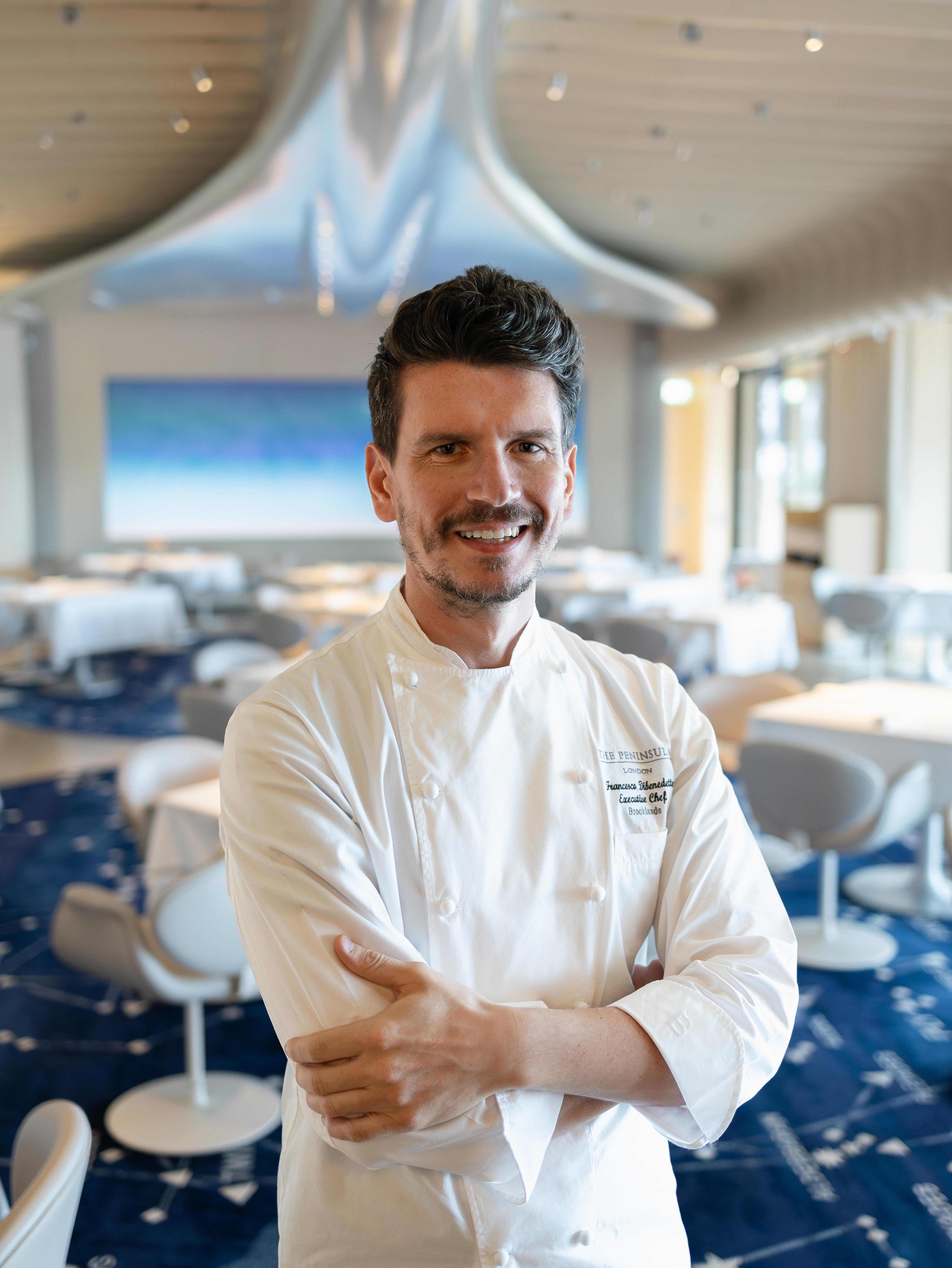
Today, my approach is very human. I’ve realised how important it is to understand each person’s personality and psychology in order to bring out the best. At Brooklands (picture above), for example, I was coordinating 28 people in the kitchen and 22 in the dining room. In such a complex environment, leadership is essential—and not everyone is naturally suited to it.
I try to be a good motivator for young cooks. I see a huge difference compared with previous generations. Young chefs today are no longer willing to beg a Michelin-starred chef for an internship; instead, they are curious, open-minded, eager to learn and motivated by change. On average, they stay in the same restaurant for about a year and a half. It’s a very different path of professional growth, one that inevitably brings significant staff turnover and makes it harder for restaurateurs to maintain consistent standards.
I don’t believe the old methods, when French kitchens were run with extreme rigidity, are effective anymore. Times have changed, and we need to adapt. One of the greatest improvements of recent years has been the introduction of two days off each week, allowing people to achieve a healthier balance in their lives.
What philosophy lies behind your cooking?
I like to compare recipes to a ship loaded with dishes learned from other chefs over the years. At the bottom of that ship there is a small hole: once all those recipes have drained away, the chef is left empty.
That’s why my message is simple: you must nurture your passion for cooking every single day. I try to do the same with my team. That’s my philosophy in the kitchen. It’s not just about the plate itself, but about the whole world behind it, starting with ingredients and seasonality.
How do you recruit your team?
When I interview a candidate, I don’t pay too much attention to the CV. What I look for is passion in their eyes and how deeply rooted it is. Working in a kitchen isn’t just a job; it’s an act of dedication.
My sincere advice to young people today is this: look beyond the plate. Learn the techniques and understand how to apply them. Curiosity needs constant nourishment.
What kind of mentor are you?
I communicate a great deal in the kitchen and openly share my knowledge. That’s how I pass on my dishes. I don’t work with written recipes. I create and share, while also welcoming ideas from my team.
I believe the true value of training lies not only in teaching someone how to cut a brunoise, but also in teaching how to become a chef with genuine passion. We’re all at the stove together, my team and I. The presence of a mentor is essential, because people need to be nourished in every sense of the word.
How did your whisky-aged Parmesan risotto come about?
First, I should say that I love acidity and the world of vinegar.
It all began when I tasted a whisky cocktail infused with juniper berries. Its intense smoky notes immediately reminded me of the rind of aged Parmesan. That sparked the idea of ageing a 48-month Parmigiano Reggiano (our exclusive supply) in whisky, using a terracotta vessel from my vinegar provider. After a month of maturation, I obtained a pure Parmesan-and-whisky extract, which became the foundation of the risotto. The dish is finished with Tasmanian pepper, chosen for its delicate blueberry notes. The result is a white risotto with remarkable aromatic complexity: the whisky enhances the smoky character of the Parmesan, evoking the flavour of bacon. It's a dish I'm particularly fond of and one that I believe will be back on my menu.
Which Apulian ingredients do you love most?
Besides tomatoes, I’d say goat, lamb and mussels. Those are the foods I look forward to most whenever I go back to Puglia.
What was your favourite childhood snack?
Every morning I used to eat a raw egg (from the henhouse next to our home), whisked with honey, along with toasted bread spread with my mother’s quince jam. I still have exactly the same breakfast whenever I return to Puglia.
I like eating healthily, with plenty of fruit and vegetables.
Where can we find your Italian identity on the Brooklands menu?
First and foremost, in the cooking methods. I make extensive use of traditional Apulian techniques passed down by my grandparents, such as cooking under ashes. As said, I used terracotta jars to macerate Parmesan rinds in whisky and create my risotto.
As for ingredients, I’ve tried to give the menu an Italian character by using produce grown in Britain. A few years ago, I launched an agricultural project and established three farms between Cornwall and Wales to grow ingredients as we would in Puglia and to revive heirloom varieties: tomatoes, cime di rapa, carosello cucumbers and Zephyr courgettes.
What happens to meat and fish trimmings?
Nowadays, they hardly exist. Ingredients arrive already cleaned and portioned. It’s one of the consequences of having fewer staff.
The problem is that this once again creates major gaps in the training of young chefs, many of whom no longer know how to fillet a fish or butcher meat properly.
I remember that at the beginning of my career, Chef Roux told me: “If you can bone and portion a rabbit, you’ll be able to do the same with a cow.” He was absolutely right.