Chef Fabri’s cuisine brings Italy and Korea closer together
di Gaia Soleri
| Storie e Interviste | Del 27/10/2026 |
We have asked chef Fabrizio Ferrari, who lives in Seoul, to explore the dialogue between two culinary cultures united by a quest for intense flavors and a love of conviviality. Similarities and differences between Italian and Korean cuisine. Two recipes from his cooking show “Italia e Corea a tavola” in Milan. At the helm of Fabri Kitchen in Seoul, he reveals what his Korean customers like. As a promoter of Hansik, he suggests new ways to introduce Korean culinary tradition in Italy, inviting people to discover it in its authenticity, from long fermentations to lesser-known signature dishes.
Interview with chef Fabrizio Ferrari, aka Chef Fabri
Korean cuisine (hansik) and Italian cuisine: similarities and differences
They are built on a vast array of different ingredients, but they share a very similar philosophy: the pursuit of a strong, deep, satisfying flavor that gives you real pleasure when you eat. The big difference between Korean and Italian cuisine lies in how flavor is extracted, and it's a funny contrast between the two cultures. In Italy, we spend most of our time cooking in the pot to draw out harmony and depth of flavor, through broths, soffritti, tomato concentrates and more. In Korea, on the contrary, the magic happens outside the pot, in large earthenware jars (hangari) used to ferment foods and make sauces like doenjang, ganjang and gochujang.
These fermented Korean sauces don't come from a base or stock, but from long processes of fermentation and maturation that transform the ingredients and develop deep, complex flavors. The result is a product that already has a strong flavor identity: just add a spoonful and the dish has character.
The goal of Italian and Korean cuisine is the same: to create a strong, satisfying flavor. Another affinity concerns the act of eating itself: in both cultures it is a strong socializing element, deeply rooted in society, and a daily act of sharing (with family and with colleagues).
The ritual of sharing meals: how do Koreans eat?
A Korean table is set with numerous small side dishes (banchan) to share, and diners combine the food as they like it on their own plate. As a chef, I find it great fun, because it lets you experiment every day with combinations of flavors and textures.
From my experience, I can say that at the table Koreans are curious about creating new flavors with their own ingredients, while compared with other cuisines of the world they are more cautious. They tend to seek "Koreanness" even in pasta: for example, they prefer pasta with extra sauce, something reminiscent of a bibimmyeon (cold noodles dressed with a rich, sweet-and-sour, spicy sauce).
What is your comfort food?
When it comes to Italian food, spaghetti with tomato sauce, plenty of olive oil and a mountain of Parmigiano cheese. From Korean cuisine, I love sundae-gukbap, a very nourishing traditional dish: a rich soup made with bone broth, served with boiled rice and slices of sundae, a kind of Korean blood sausage that contains parts of the pig's fifth quarter (offal).
How can Korean cuisine be promoted in Italy?
Speaking of Milan, I'd say it is almost ready for new Korean openings, and it already has a fair availability of original ingredients. As for Italy in general, the presence of Korean restaurants is still very limited (especially compared with the numbers for Japanese restaurants).
To promote Korean cuisine, first of all you need to communicate it correctly and make it exciting for the Italian public. One way is to present Korean cuisine in the most authentic way possible, using the correct terms: naming is essential. When it comes to seaweed, I keep telling Italians, "Call it gim, not nori!"
I'd also say don't give in to the temptation of offering the usual kimbap or bibimbap, which are similar to dishes from other Asian cuisines. Instead, I suggest starting with naengmyeon (buckwheat noodles served cold) and icy broths. It's a rather unusual choice, but it generates interest. Better to start from the differences with other cuisines to spark curiosity. Finally, you need to explain original, authentic Korean cuisine properly.
Is it true that Korean cuisine is full of garlic and chili pepper?
It's absolutely true! Garlic is a fundamental base of Korean cuisine. I love it and I even eat it raw. I love chili pepper too, but I have to be careful with it, since over the past five years I've developed chronic esophagitis.
Spiciness has been a recognizable component of Korean cuisine for centuries, and in recent years it has gained visibility, helping to strengthen the association with intense, spicy flavors. Chili pepper also has an anti-stress effect. Believe it or not, in Korea there are spicy dishes designed specifically for a first date, capable of stimulating endorphins and easing tension. Extremely spicy chicken feet, or grilled gopchang with plenty of hot sauce – a dish made from offal, specifically the small intestine of beef or pork. Offal is very popular with Koreans.
Which Fabri Kitchen dishes do Koreans love the most?
Without a doubt, the creamy pastas with lots of cheese and a little cream. Interestingly, in Korea pasta is divided into three categories: oil pasta, tomato pasta, cream pasta. We try to design a menu that takes these divisions into account (without spelling it out). Oil pasta is basically a pasta aglio e olio, without sauce but with chicken broth; tomato pasta is, well, with tomato sauce. Our versions of creamy pasta are very successful: besides our PPP pasta with prosciutto and peas, we offer fresh pasta with butter and truffle, butter and lemon, butter and anchovies. Generally speaking, Koreans like pasta with red sauce less, because they don't particularly appreciate the acidic freshness of tomato.
The new Fabri Kitchen is located in the Apgujeong-dong neighborhood, in the Gangnam district of Seoul.
What kind of meat do we find in Italian restaurants in Korea?
The main course section is dominated by grilled meats, such as T-bone steaks and lamb chops. What was missing from the menus was slow-cooked, braised meat, like brasato, spezzatino and chicken “alla cacciatora”. We started offering them and I must say that a kind of spezzatino was well received, as was the brasato with polenta.
Which recipes did you present at the K-food event in Milan?
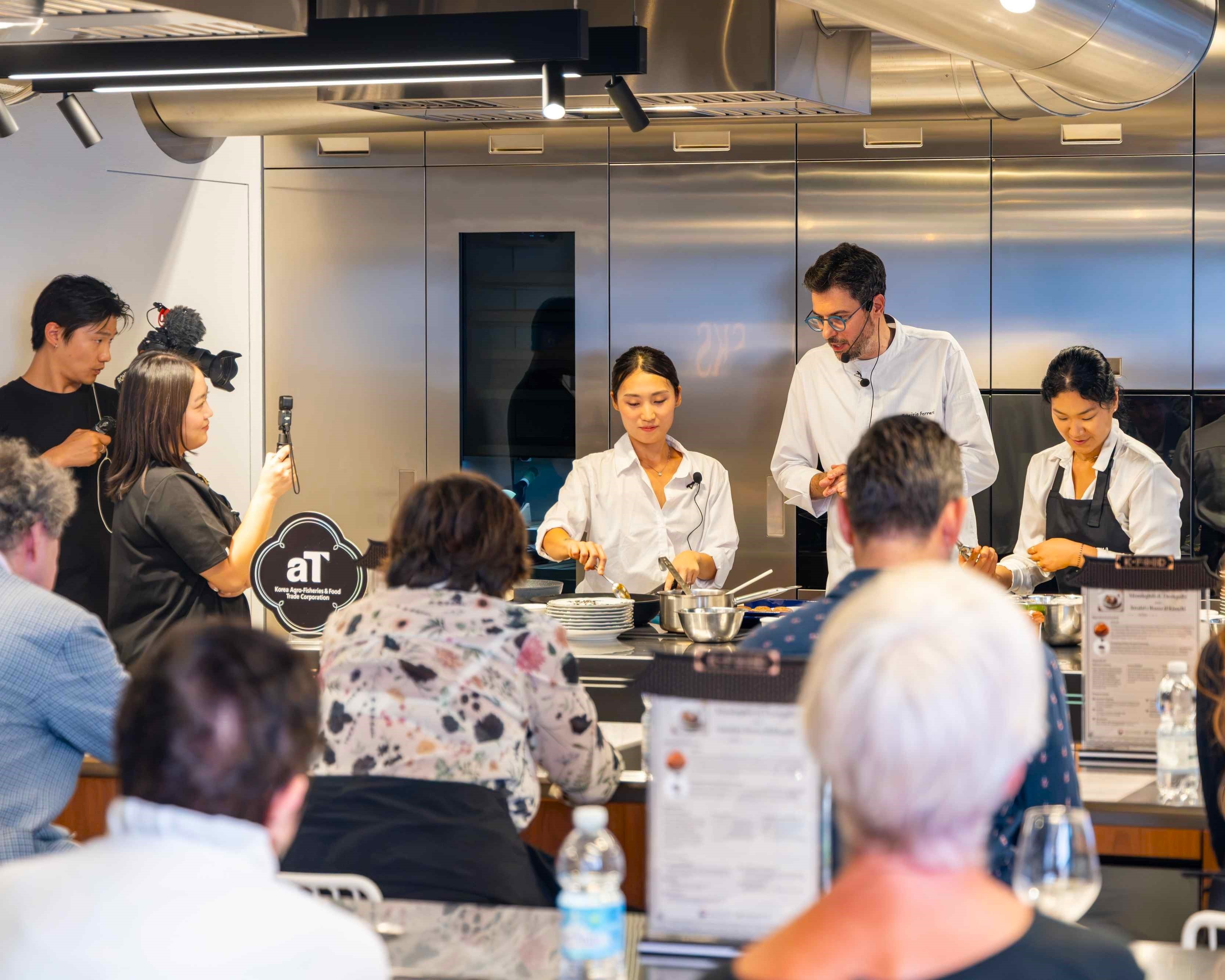
Thanks to an initiative of aT Center Paris (a government agency of the Ministry of Agriculture, Food and Rural Affairs of the Republic of Korea), last month I had the pleasure of presenting, in the Signature Kitchen Suite Milano showroom, two recipes designed to seal the encounter between Italy and Korea: risotto alla milanese with kimchi, and mondeghili of tteokgalbi with kimchi Russian salad. The cooking show was a great success, with an audience three times larger than last year. A sign that this kind of event is stirring growing curiosity about Korean cuisine.
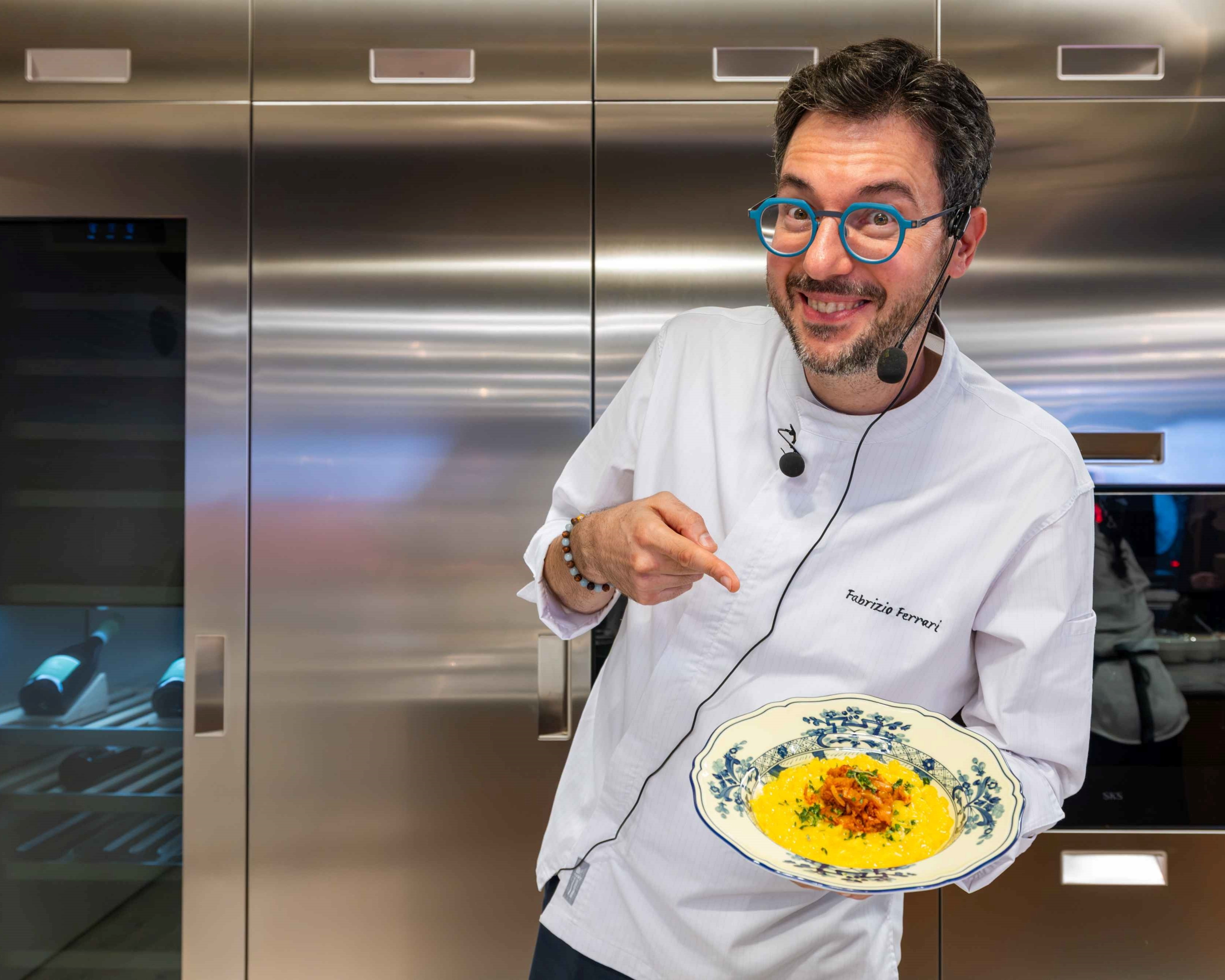
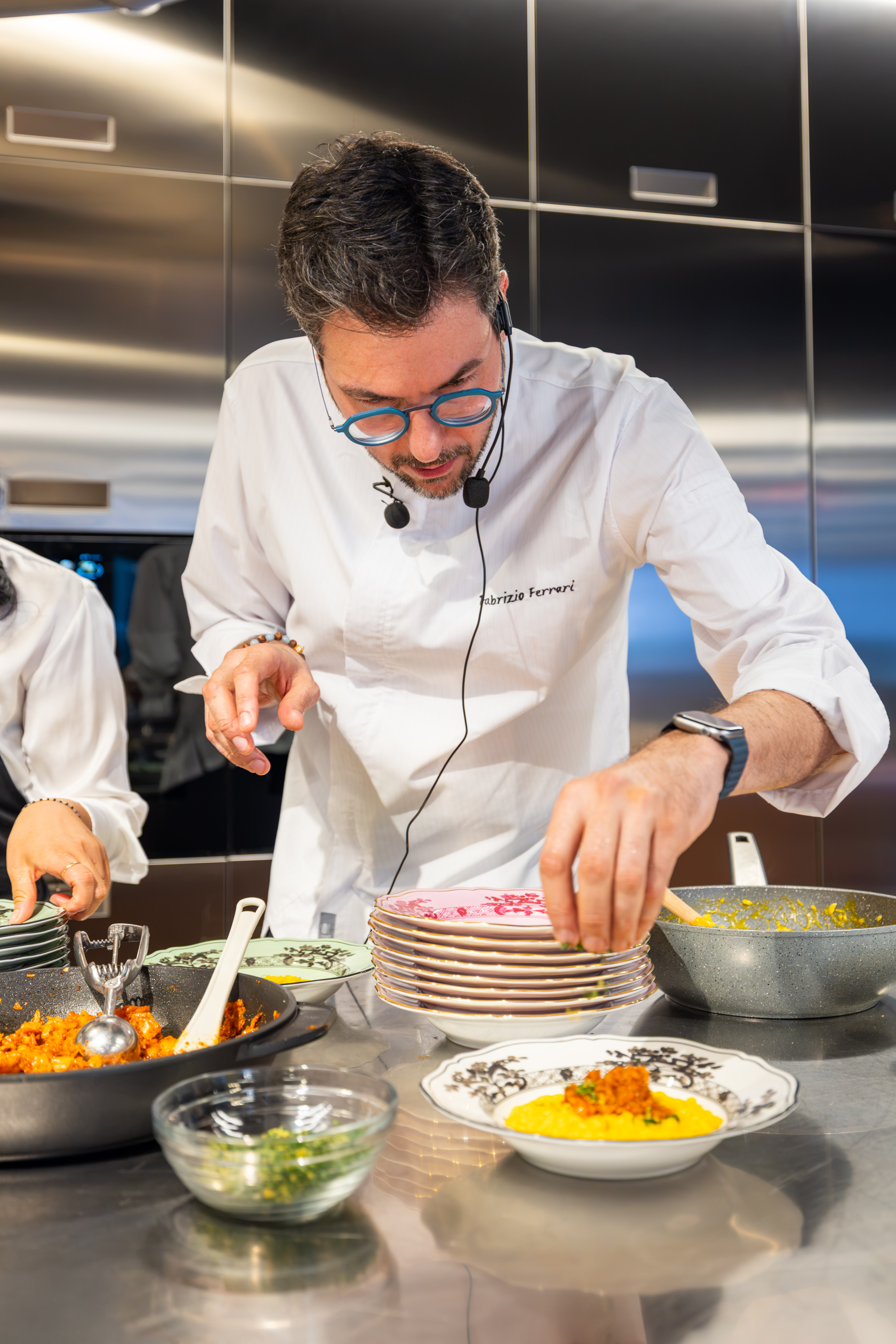
To the traditional risotto alla milanese I paired kimchi sautéed with ssamjang sauce (Note: a thick, savory sauce made from fermented red chili paste, soybean paste, garlic and sesame oil), finished with a gremolata of parsley, lemon zest and garlic.
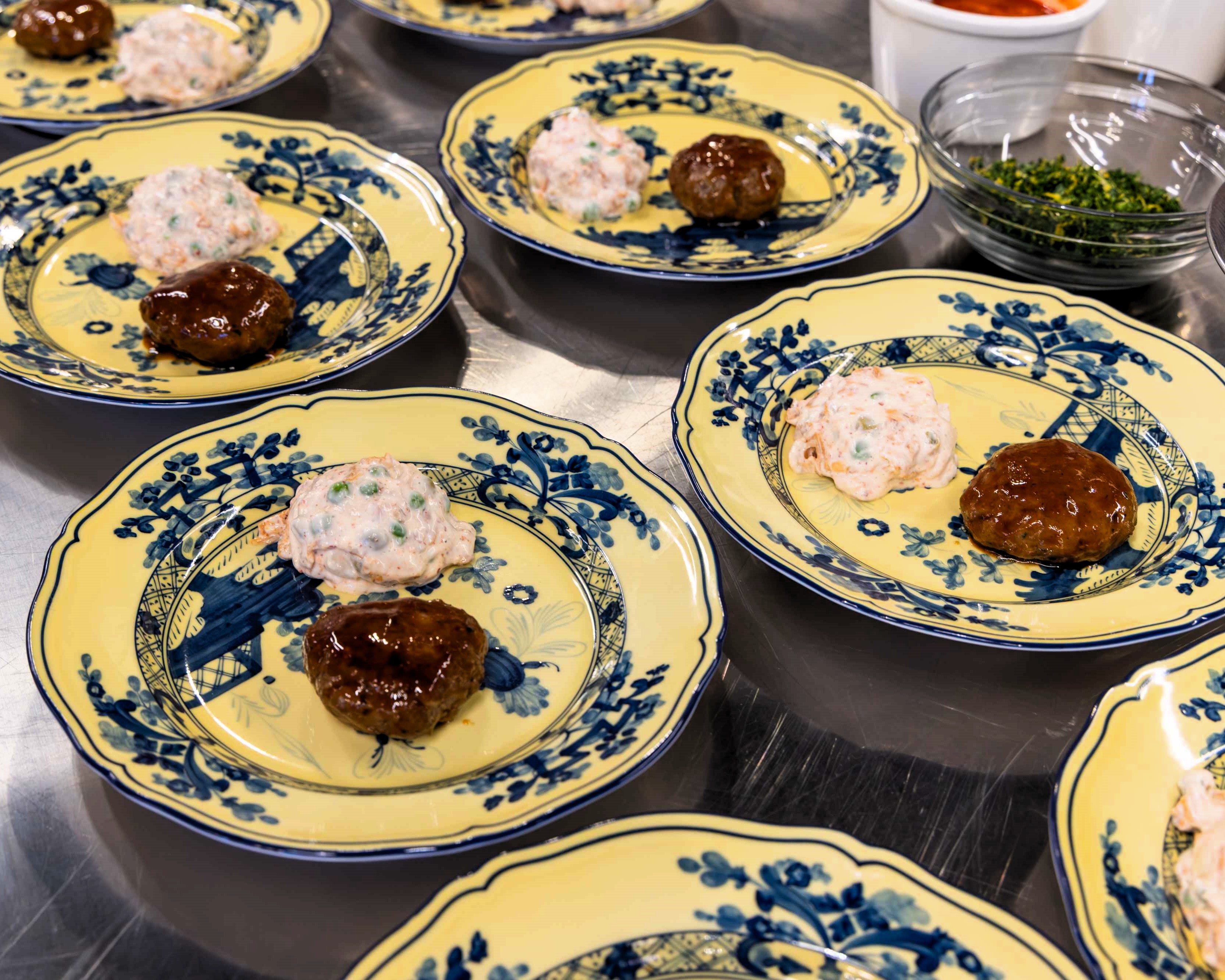
For my reinterpretation of mondeghili, I was inspired by Korean tteokgalbi, patties of ground, spiced and glazed meat. The meat is worked with pear juice and soy sauce, shaped into meatballs and browned, then finished with a reduced glaze made from soy and honey. The dish is served with a Russian salad dressed with kimchi juice and chopped kimchi.
In my opinion, Italians love the flavors of Korean cuisine and are ready to welcome it.
Chef Fabri, from Korea with love
Italian, former Michelin-starred chef at his family's restaurant Al Porticciolo 84 in Lecco, Fabrizio Ferrari is now a leading name in Korea, where he has been living and working for some years. Many will remember him as Chef Fabri, the charismatic contestant on the reality show Culinary Class Wars (Netflix), where he showed his intercultural vision of cooking.
Ferrari is now Ambassador of Hansik, Korean cuisine, which he promotes with rigor, passion and curiosity. Thanks to him, flavors and textures become more familiar, and Korean terms are beginning to enter everyday language. His enthusiasm during cooking shows and masterclasses is overwhelming.
His social media profile is @fabrilicious